B’nai Mitzvah Parent Handbook & Simcha Planning Guide
WELCOME!
Mazel Tov as you enter this special time in your family’s life! Below, you will find information to help you plan your upcoming simcha.
A Message from Rabbi Averbach
Keeping B’nai Mitzvah in Perspective
Reminder that the public ceremony and party are not an endpoint, but rather the beginning of a young person’s lifelong journey into adult Jewish life, responsibility and community.
Timeline for B’nai Mitzvah
Expectations and Responsibilities
B’nai Mitzvah Service Information
Glossary
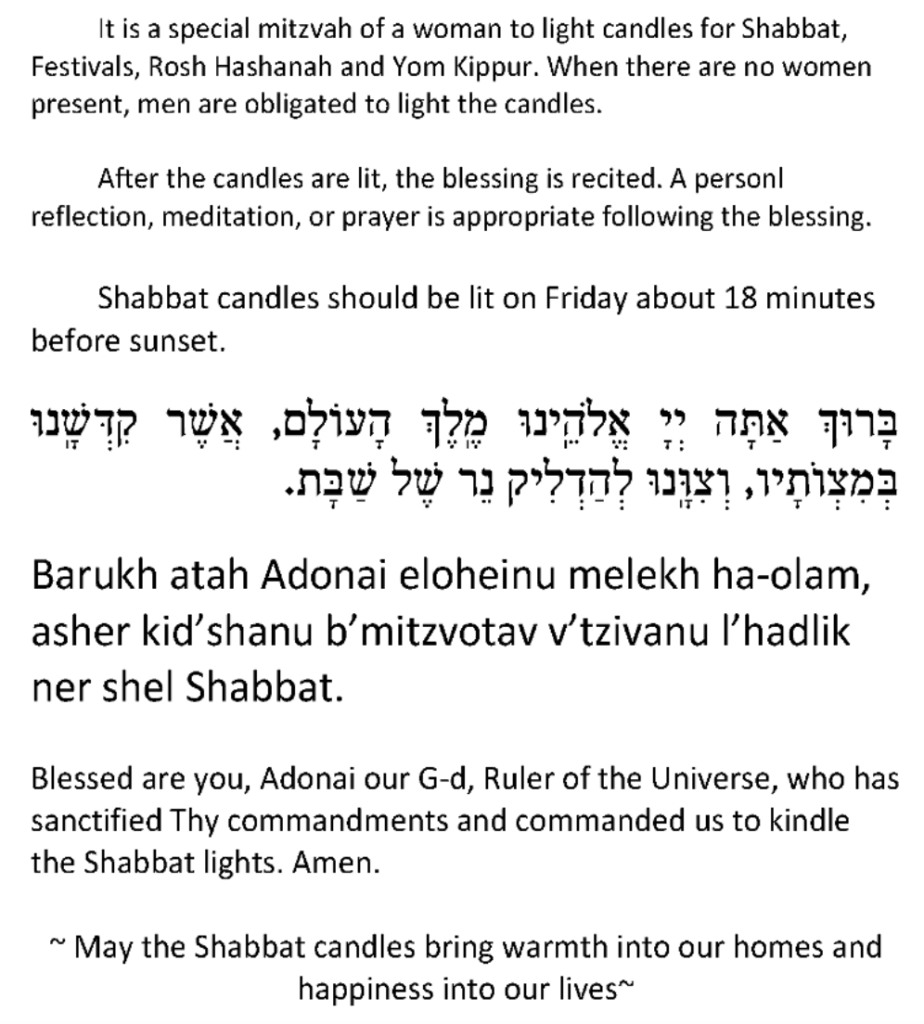
All information regarding the B’nai Mitzvah process, service, qualifications, fees, Temple policies, and the Shabbat candle blessings.
Shabbat Candle Lighting
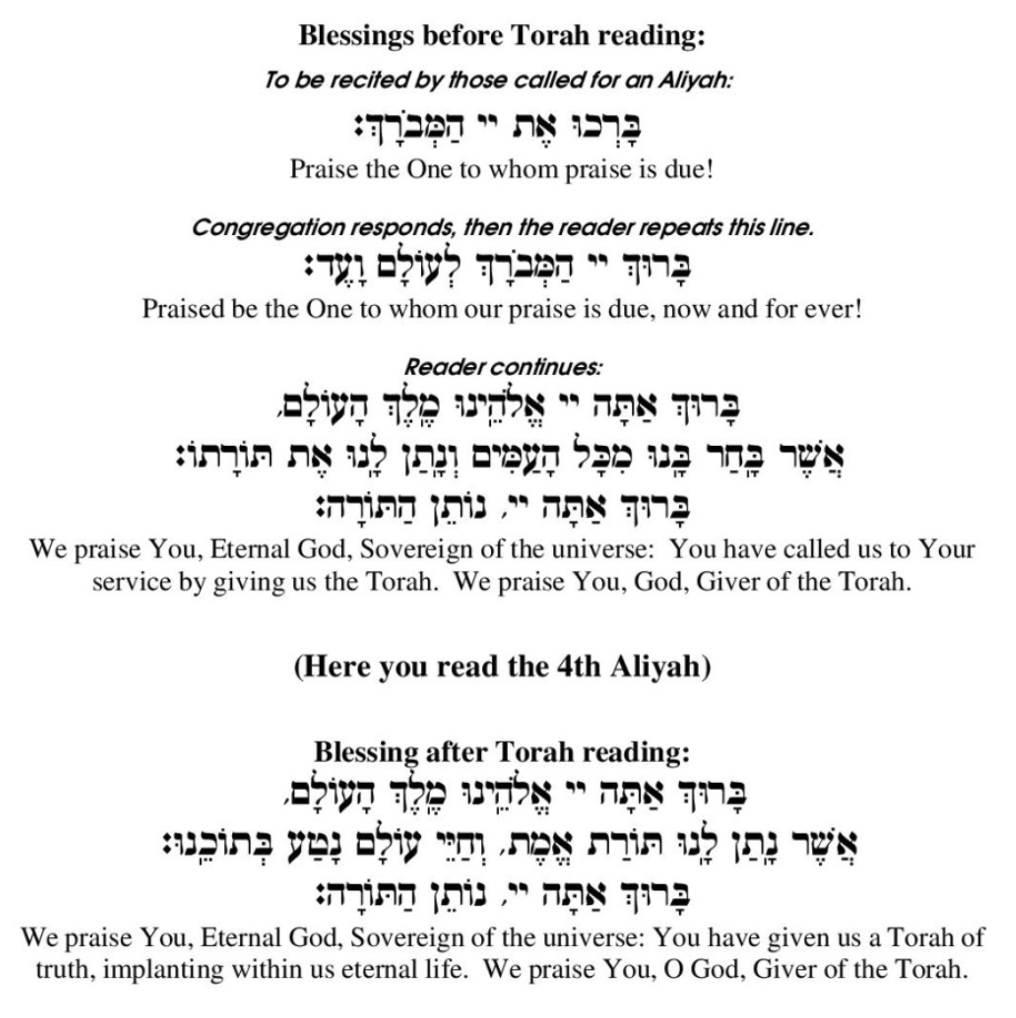
Blessings Before and After Torah Reading
Honors Sheets
Please download and complete the Honors Sheets for:
Morning Service
Afternoon Service
Gift Shop
Women of TEC Gift Shop has a wide selection of tallitot, kippot and head coverings, as well as other Judaica items. As a B’nai Mitzvah family, most items are discounted 20% discount six months prior to your Bar/Bat Mitzvah.
Shabbat Dinners, Oneg and Kiddush Sponsorship, and Extended Kiddush options
Each B’nai Mitzvah Family will sponsor the Friday Night Oneg and families with a morning Bar/Bat Mitzvah sponsor the Saturday morning Kiddush. Please contact Shane in the temple office 6-8 weeks prior to your child’s B’nai Mitzvah to choose a sponsorship level.
Preferred Catering Panel
Please find a list of approved kosher caterers that you can use for receptions held at TEC. All food served at Temple Etz Chaim must meet kosher standards.
Tree of Life Donation Form
If you’d like to donate to the Tree of Life found in Remembrance Hall, please complete the form included in this folder. Once payment is received, a leaf will be placed on the wall.
A MESSAGE FROM RABBI AVERBACH
Dear B’nai Mitzvah Students and Families,
We are beyond excited to join you on this journey! At Temple Etz Chaim, we strive to offer every young adult and every family the most memorable and significant B’nai Mitzvah experience possible. We are here to help you.
As a congregation, our goal is not to dictate any specific number of verses or prayers that a student should sing, chant, or read. Rather, we want all our B’nai Mitzvah students to study hard, to learn what they are capable of learning, and to recognize that they can truly take their places as fine adults among the Jewish people. Even more, we want our youth to know that they are heirs to a faith and a tradition that is noble and worthwhile and that their B’nai Mitzvah, their coming of age in that faith and tradition, is a special moment in their lives.
That precious moment is a way of saying, “I am proud to belong to the Jewish people and I will begin to take the commandments more seriously as a responsible Jewish adult.”
We look forward to working with the B’nai Mitzvah students in their classes and individually as they approach this important day. Together we will work as a team for what is best for you.
Through your studies in Religious School, you have learned about Jewish history, customs, and traditions. You have also gained the ability to read Hebrew prayers. As you become B’nai Mitzvah, it is a time to rejoice. This ceremony gives you your first opportunity to become an active participant in a Shabbat service.
Jewish tradition views a child’s spiritual growth and moral development as a great accomplishment. As you celebrate becoming B’nai Mitzvah, it is our belief that this milestone is not the end of your Jewish studies, but rather the beginning. We hope you will feel an innate desire to continue your formal study of Judaism.
Temple Etz Chaim’s Confirmation Program has created an opportunity for you to continue your studies by providing a stimulating and exciting educational experience. The first hour is a core class and the second hour consists of a choice of electives. This is genuinely valuable for our post-B’nai Mitzvah students. We hope you will make the personal commitment to continue your Jewish education.
Our Temple Etz Chaim team is dedicated to helping make your simcha a success. We realize that planning this wonderful occasion can be overwhelming at times. Please feel free to call the temple office with any questions or special concerns you may have.
We want your child to lead our community with a strong sense of pride and a true feeling of accomplishment. We would like to take this opportunity to wish you Mazel Tov on this marvelous event in your family’s life. The importance of this day is one that will remain in your heart forever.
L’Shalom,
Rabbi Ari Averbach
KEEPING B’NAI MITZVAH IN PERSPECTIVE
(From the Bar and Bat Mitzvah Handbook: A Manual for Parent and Student, Temple Ner Tamid, Bloomfield, NJ)
B’nai Mitzvah is about the Acceptance of Responsibility. In the final analysis, this is the bottom line of becoming a B’nai Mitzvah. It is not about acquiring the skill of k’riah, – “the reading of the Torah.” Rather, it’s about acquiring the skill of responding to a challenge: a mitzvah. This is how Judaism defines maturity.
The Torah is the Center of Judaism. Everything we do as Jews, everything we believe, everything we value revolves around the Torah. The Torah is the testimony of our people’s encounter with God. And, however you interpret those events in the wilderness of Sinai some three millennia ago, what cannot be dismissed is the sacredness with which our ancestors have embraced this legacy. This is why the first mitzvah we expect our children to fulfill is to stand at Torah.
B’nai Mitzvah is a Community Observance. It is not by coincidence that we choose to hold this initiation ceremony in public. To be a Jew means to live within a covenantal relationship – not only with God but with other Jews as well. B’nai Mitzvah marks the entry of the child as a full-fledged member of the community.
The awarding of an Aliyah, (‘being called to the Torah”), is a gift of the Jewish people. For this reason, the marking of the child’s coming of age takes place in the Synagogue – the communal home.
The B’nai Mitzvah Ceremony is not a Performance: It’s a Celebration. The Synagogue is not a theater, and the Bimah is not a stage, and the congregation is not an audience. More to the point, the only mistake one can make at a B’nai Mitzvah is to lose sight of the truth.
Try to Think of the Reception that Follows not as a Separate Event but as a Continuation of the Celebration. In fact, Judaism has a formal name for the meal after a B’nai Mitzvah: it is a s‘udat mitzvah. This meal is honor of the performance of a mitzvah. It too, is a sacred gathering. This is not to say that it must be solemn, it is to say, however, that the spirit of the morning’s celebration should be perpetuated through the performance of mitzvot. The recitation of the blessings and the setting aside of a portion of one’s bounty for the poor demonstrate that the morning’s celebration was not an isolated event but a standard from which to follow.
The Meaning of Becoming a B’nai Mitzvah is Enduring Only if it Takes Place within a Context and Continued Jewish Growth. Being a B’nai Mitzvah is not the experience of a lifetime. It is a lifetime experience – a state of being that remains with us throughout our lives. Indeed, the true measure of performance comes not on the day one becomes a B’nai Mitzvah but in the days that follow. In other words, becoming a B’nai Mitzvah should be thought of as a Jewish “commencement,” marking not an end point but a beginning- a beginning of a lifetime of mitzvot, a beginning of a lifetime of learning. As such, it is our firm belief that the B’nai Mitzvah celebration is validated and enhanced by a commitment to continue religious education to confirmation and participation in our Temple Youth Group.
TIMELINE FOR B’NAI MITZVAH
6-8 Months Prior
- Joyce Bronstein will assign your child a tutor for 18 hours of direct B’nai Mitzvah tutoring.
- The cost for the B’nai Mitzvah tutor is $750. To avoid additional fees for extra tutoring hours, it is important that your child study regularly to stay on track with their preparations.
- Families are encouraged to regularly attend Shabbat evening and morning services as part of the B’nai Mitzvah preparation. If your child is becoming a B’nai Mitzvah in the afternoon, you are welcome to attend any scheduled afternoon service.
- Hazzan Noam will reach out to you to review the prayers and melodies.
3 Months Prior
- The B’nai Mitzvah family sponsors the Oneg Shabbat on Friday evening and the Kiddush on Saturday when the B’nai Mitzvah is scheduled for a morning service. Shane will contact you to discuss the type of dessert reception you would prefer to provide. You are welcome to contact the temple office for more information.
- The family submits a photograph and brief bio of the B’nai Mitzvah student for the temple bulletin and weekly handout. Contact Jill for more details.
- Meet with Rabbi Averbach for assistance with speeches and to fill out the honor sheet.
2 Months Prior
- To take photos in the main sanctuary, families must schedule a time with Shane in the temple office.
1 Month Prior
- Turn in the honor sheet, drafts of student’s D’var Torah, and parents’ speech(es) to Rabbi Averbach.
- Meet with Hazzan Noam to walk through the service timeline.
- Inform Shane or Jill whether to expect flowers or fruit for the bimah.
EXPECTATIONS AND RESPONSIBILITIES
Religious School & Tutoring
The student must be enrolled in TEC Religious School, complete satisfactory work in the B’nai Mitzvah year and attend Religious School regularly.
Religious School attendance will be waived for all students who have attended Jewish Day School for at least three (3) consecutive years prior to their B’nai Mitzvah dates. Day School students are required to receive the same individualized instruction from a Temple Etz Chaim-approved B’nai Mitzvah tutor as the students who regularly attend our Religious School.
One year prior to B’nai Mitzvah, the Religious School will evaluate the student’s Hebrew reading skills. If the student is still struggling with their Hebrew reading skills and basic knowledge of Jewish customs and ceremonies, Joyce Bronstein will determine the appropriate course of action in consultation with Rabbi Averbach.
We expect the family to attend a minimum of 3 Friday night services and 3 Saturday morning or afternoon services, though more are strongly encouraged.
Attendance at Sunday morning minyan is strongly encouraged.
The B’nai Mitzvah tutoring fee of $750 is required to be paid in full (or three-monthly installments of $250) within the first three months of tutoring.
A minimum of $250 must be paid prior to the beginning of B’nai Mitzvah tutoring.
Membership
The student’s family must be a member in good financial standing of Temple Etz Chaim.
Enrollment in Religious School is mandatory for the entire Temple Etz Chaim fiscal year in which the ceremony takes place.
Temple members’ financial obligations must be paid ninety (90) days prior to the event according to the following schedule:
Families with B’nai Mitzvah ceremonies occurring between July 1 and September 30 are required to pay 50% of membership dues, security fees, and facility fees, and 100% of the B’nai Mitzvah child’s Religious School tuition, books, materials, and any additional costs previously mentioned.
Families with B’nai Mitzvah ceremonies occurring between October 1 and June 30 are required to pay 100% of membership dues, security fees, facility fees, and the B’nai Mitzvah child’s Religious School tuition, books, materials, and any additional costs previously mentioned.
Congregation Commitments
The family sponsors both the Friday night Oneg Shabbat and the Saturday morning Kiddush for the congregation. The Oneg and Kiddush must be paid in full ninety (90) days prior to the B’nai Mitzvah.
Flowers to decorate the bimah may be arranged between you and your florist. Flowers must be delivered to the Temple before 2:00 p.m. on the Friday of your B’nai Mitzvah. Alternatively, you may use fruit to decorate the bimah. Please contact Shane in the temple office for more details.
We know you want to share your Simcha with the congregation and community. Therefore, three months in advance of the B’nai Mitzvah date, please send to the Temple office a photo of your child and a short biography. These two items will be highlighted in the temple bulletin and weekly handout. Information should include the child’s interests and plans for the future, and what becoming a B’nai Mitzvah means to the child. Please email both to .
Shabbat Services/Receptions
If an afternoon service is approved, there is an additional charge of $1,800 which covers the added cost associated with this individualized service.
All photographers and videographers MUST stay in the sound room for the entirety of Shabbat services.
Candle lighting, DJs, and sign-in books/boards, etc. are prohibited during a Saturday morning extended Kiddush.
If you would like to schedule a reception at the Synagogue, contact Shane in the temple office, and we will provide you with a list of our approved caterers.
If you are using a party planner, they must coordinate with the temple office regarding what may and may not be done in the sanctuary, Spiegel Hall, etc. (e.g., no smoke or fog machines, live flames, or confetti throwing will be permitted). Nothing may be hung on the draperies, walls, or ceilings in Spiegel Hall or Paskow Sanctuary.
A NOTE ON DRESS CODE
As you choose clothing, please remember that your child is leading a sacred religious service. We expect your family to dress appropriately. If you have questions, please contact Joyce Bronstein or Rabbi Ari Averbach.
B’NAI MITZVAH SERVICE INFORMATION
At least one month before the Simcha, you must provide the office with a list of those who will receive honors during your Shabbat service. The list should include Hebrew names for those receiving Torah aliyot. Since Jewish ritual practice is involved, only persons of the Jewish faith will be allowed to receive a Torah Aliyah. A non-Jewish family member may come onto the Bimah for certain honors. Rabbi Averbach can explain more about this policy.
Shabbat services begin Friday night at 7:00 p.m. and Saturday morning at 9:30 a.m. Guests should be advised to arrive promptly as Shabbat services start on time.
All Shabbat services held in the Sanctuary are livestreamed over the internet. Occasionally, this service is unreliable as it is dependent on many factors. Videotaping and photography are permitted during services from the glass-enclosed sound room.
All deliveries, such as flowers, kippot and handouts, should arrive no later than 2:00 p.m. on the Friday of the B’nai Mitzvah.
If you are providing personalized kippot, programs, etc., please also provide a container (basket, decorative box, tray) to place on the greeting table.
Our synagogue greeters can assist with handouts if the B’nai Mitzvah family wishes to provide them.
A kippah is required for all males. Adult males opening the Ark, having an Aliyah, or reading from the Torah must also wear a tallit. If you need to borrow a tallit, tallitot are available in the lobby outside the doors leading into the sanctuary.
Head coverings for females are strongly encouraged, especially if they are participating in the service.
The members of the immediate family are asked to sit in the first row, with their relatives behind them. Those receiving aliyot and other honors are requested to sit towards the front. For those needing accommodations, there is a ramp on the rabbi’s side of the bimah.
The family is encouraged to invite Jewish friends or relatives to read Torah portions. However, all Torah reader assignments must be approved by the clergy. Advance notification of readers is required, and readers should be well-prepared. If a person assigned a reading is unable to read their Torah portion, please let the rabbi know at least two weeks prior to the event. Audio recordings of Torah portions can be provided.
Parents present their child with a tallit during the service. Non-Jewish parents are invited to participate in the tallit presentation as well.
Parent speeches should be concise (1-2 minutes), appropriate, meaningful, and should not embarrass the B’nai Mitzvah student. The subject matter should be centered on Judaism, the impact of Judaism on your lives, your hopes for the future, and the significance of this special day. A draft must be approved by Rabbi Averbach.
GLOSSARY
- ALIYAH (pl. ALIYOT): An honor during the Torah service where a person or small group of people are called up to say blessings at the Torah before and after it is read. There are seven aliyot every Saturday morning and three aliyot in the afternoon Mincha service. The honorees are called up by their Hebrew names, including their parents’ Hebrew names (e.g., Rivka bat Avraham v’Sarah). If you would like to honor family or friends with an aliyah, start collecting their Hebrew names (and their parents’ Hebrew names). Each honoree must be Jewish and at least 13 years old.
- ARON HAKODESH: The ark in which the Torah(s) is/are kept.
- BAR/BAT/B’NAI/B’NOT MITZVAH: Literally, a child (or children) of the Commandments. Bar (“son of,” singular), Bat (“daughter of,” singular), B’nai (plural), B’not (feminine plural).
- BIMAH: Pulpit.
- D’RASHA/D’VAR TORAH: The discussion of the Torah portion.
- GABBAI (pl. GABBAIM): The individuals who stand on either side of the Torah reader and help by following in the humash.
- GELILAH: The person who ties the Torah and covers it with the mantle.
- HAFTARAH: During the morning Torah service, this is the additional reading from the books of the prophets that correlates to a similar theme in the Torah reading or to a holiday on the calendar. While the Torah is read from a scroll with no vowels, a Haftarah can be read from a book or notebook.
- HAGBAH: The person who lifts the Torah.
- HAVDALAH: The ceremony separating Shabbat from the rest of the week. Done after three stars appear in the sky on Saturday evening.
- HUMASH: Pentateuch, a book that includes Torah and the Haftarah selections from the Prophets which correspond to the Torah reading.
- KIDDUSH: Prayer over wine. Also, the meal following Shabbat and holiday morning services.
- KIPPAH: Yarmulke, head covering.
- MAFTIR: The last Aliyah, the person who will read the Haftarah.
- MAZEL TOV (and SIMAN TOV): Wishes of congratulations, either said, shouted, or sung. Literally, a good sign. (Lyrics to the song translate as, “This is a good sign and good luck for us and for all Israel.”)
- MITZVAH: “Commandment,” 613 in the Torah.
- MI SH’BEIRAKH: “The one who blessed,” prayer said for those who are ill. PAGE 7
- NER TAMID: The eternal light above the Aron HaKodesh.
- PARSHA: Weekly section from the Torah.
- RABBI: “My teacher,” person who leads services and performs many religious duties.
- SHABBAT: The Sabbath, a day of rest. It begins at sundown Friday and ends Saturday night. The most important holiday in the Jewish calendar, it has been said, “More than Israel has kept Shabbat, Shabbat has kept Israel.”
- SHACHARIT: The morning service.
- SHEHECHEYANU: A blessing recited on special occasions.
- SIDDUR: Prayer book.
- SIMCHA: A joyous occasion.
- TALLIT: Prayer shawl.
- TANACH: The Bible; Torah, N’vi’im (prophets), and K’tuvim (writings).
- TEFILLAH: Prayer.
- TEFILLIN: Ritual item worn on the head and arm during weekday morning prayer, except on Shabbat and holidays.
- TORAH: The scroll on which is written the “Five Books of Moses” – Genesis, Exodus, Leviticus, Numbers, Deuteronomy. The Torah is more than the scroll though. It represents everything that we as Jews hold sacred.
- TORAH PORTION: Each week, Jews around the world read the next sequential part of the Torah. We begin with Creation in October and continue until we get to the end of the Torah the following year.
- TZEDAKAH: “Righteousness,” shown through giving charity.
- TZITZIT: Fringes of the tallit; the fringes and knots remind us of God’s commandments.
- YA’AMOD: He shall stand (Ta’amod-she shall stand); said upon calling a person for an Aliyah.
- YAD: Literally “hand,” refers to the pointer used while reading Torah.
- YASHER KOACH: “May your strength be enhanced,” said to someone upon completing an Aliyah.
- Y’VARECHECHA: “May God bless you,” the priestly blessing; thought to be one of the oldest blessings.
SHABBAT CANDLE LIGHTING
BLESSINGS BEFORE AND AFTER TORAH READING